Selecting the right transportation mode is one of the most critical decisions in supply chain management. Both air freight and ocean freight offer distinct advantages depending on your cargo volume, budget, and timeline requirements.
1. Speed and Transit Times
-
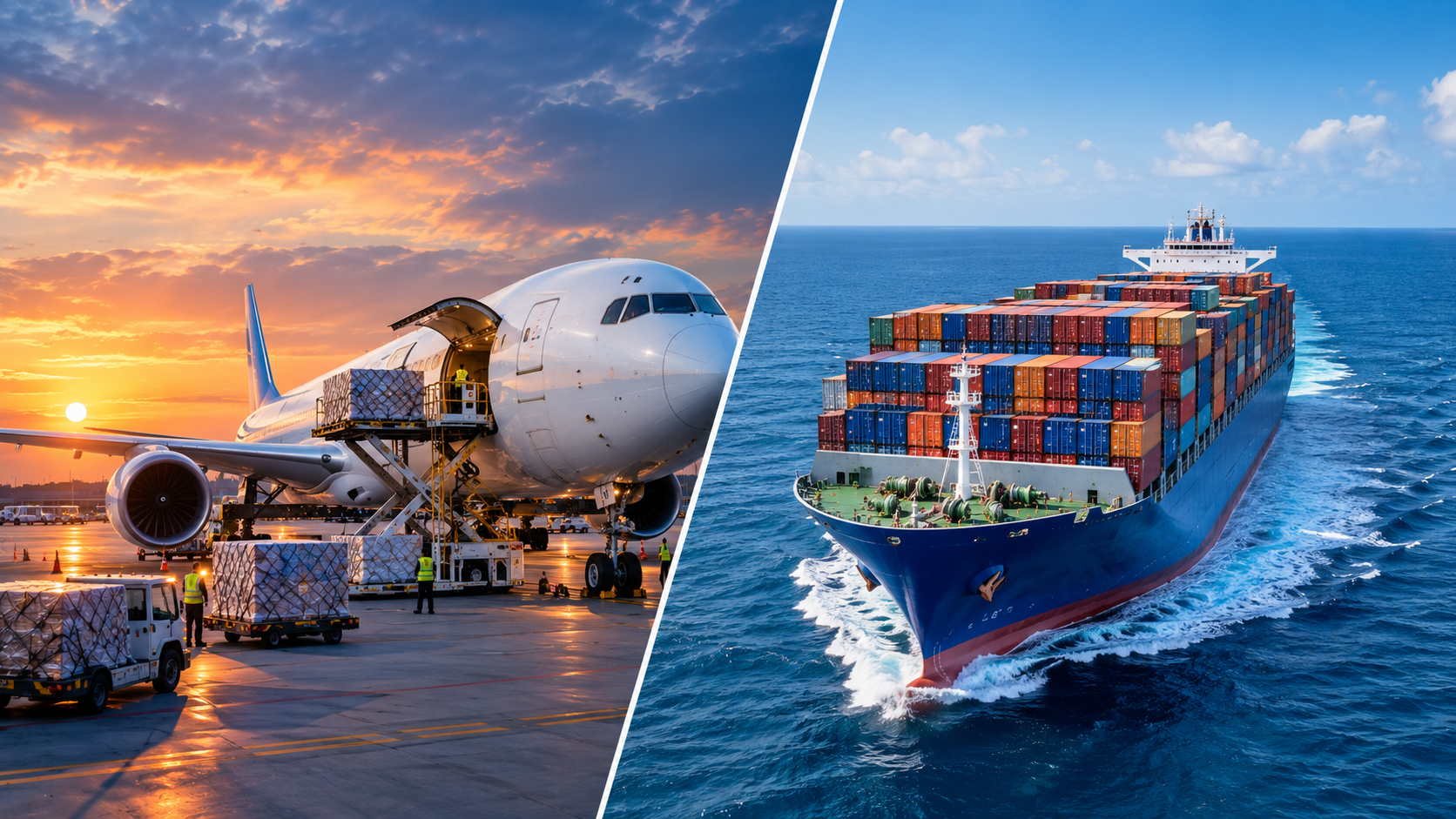
Air Freight: The fastest shipping method available, ideal for time-sensitive, perishable, or high-value electronics. International transit typically takes between 1 to 5 business days.
-
Ocean Freight: Substantially slower, with transit times ranging from 15 to 45 days depending on the maritime corridor and port congestion.
2. Shipping Costs and Budget Optimization
-
Air Cargo Costs: Priced primarily on chargeable weight (a calculation factoring in both actual weight and volumetric dimensions). It is generally 4 to 6 times more expensive than sea transport.
-
Ocean Cargo Costs: Best for high-volume, heavy merchandise. Standard 20ft and 40ft containers (FCL) or shared container space (LCL) deliver the lowest per-unit transport cost across long distances.
3. Cargo Capacity and Regulations
-
Air Limitations: Strict weight and dimension caps based on aircraft cargo hold capacity, along with stringent hazardous materials (HAZMAT) regulations.
-
Ocean Flexibility: Massive container ships can handle oversized industrial machinery, raw bulk materials, and high-cube containers with minimal physical constraints.
Evaluating transit urgency against total landing costs ensures your business maintains healthy profit margins while meeting customer delivery expectations.